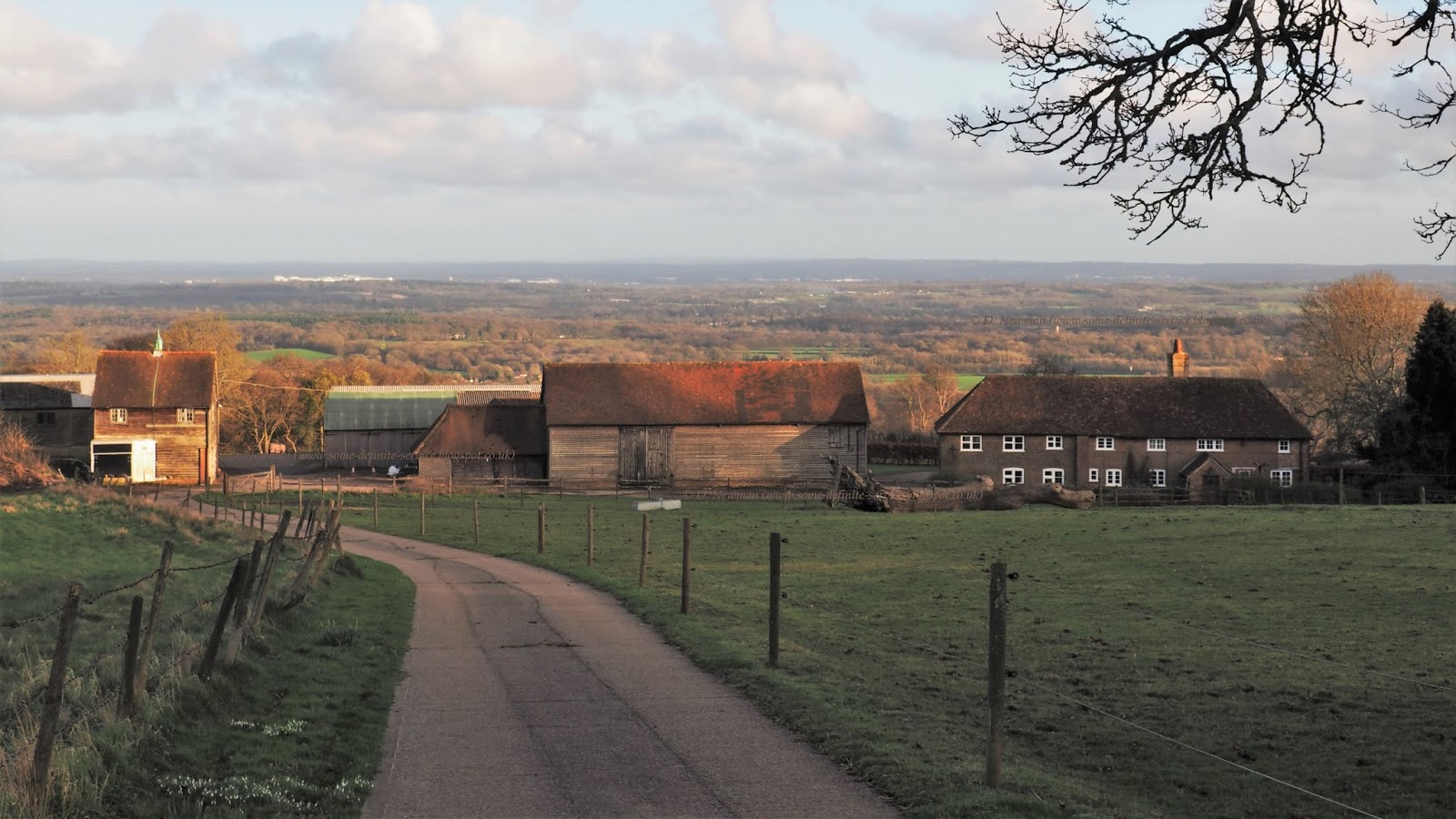
Saturday, March 28, 2020

Light against Shadow

It is an awe-striking thing to see our self-assured, hyper-ingenious civilisation brought so completely to a standstill.  An old peril has returned to stalk the world, and has swept over us with breathtaking speed.  Maybe January’s floods distracted me, but it was not really until the Coronavirus reached Lombardy that I started paying it close attention — and this was on the advice of a friend with whom I had been hoping to make my first visit to Italy in April, and who, having lived through the SARS epidemic in Singapore in 2003, had some idea of the approaching danger.  His early alertness has been completely vindicated.  (On the other hand, the pandemic really has erupted with extraordinary speed, and I don’t think that we need blame ourselves if we were taken by surprise.)  All in all, it was not until perhaps two and a half weeks ago that the scale of the crisis dawned on me, and I realised that it was only a matter of time before it engulfed us in Britain too.

Since then, an uneasy stillness has grown gradually heavier and heavier over our lives.  Even a fortnight ago, central London was perceptibly emptying out, which means I suppose that it was merely very busy rather than, as under normal conditions, pandemonium.  Road traffic subsided noticeably: one evening, on my way back home from the station, peals of church bells came to me in a street where I have never before heard them over the noise, and a blackbird’s song sounded with startling clarity from a branch high above me in the dusk.  Long before the streets fell silent, though, the atmosphere had changed: all was sober, muted, as if we were all marking some joyless anti-Christmas.  Before we were sent home from work a week ago last Tuesday, the air in the office was ionised with anxiety, and however hard we tried, we could hardly talk of anything but the virus.  We knew the wave was coming, and we were waiting for it to break over us.  Now it is upon us, and suddenly, I think still to our disbelief, we are all stuck.  Nothing can happen; nothing can move.  We find ourselves (in the Clerk of Oxford’s words) in the ‘longest Lent of our lives’.

Now the skies are empty of aeroplanes, and the torrents of traffic that usually come stampeding down my road have abated, most strikingly at night.  The new hush is slightly disconcerting, but to one who finds London’s noise immensely wearing, not unwelcome at all.  Being cut off from work, the pub, the rest of the country and from church is still taking some getting used to, though, and what an odd sight it was to see the Prime Minister leaning over his desk on Monday (23rd) to grab our lapels and tell us all to keep to our houses.  His instructions on how to wash our hands a few weeks ago was a strange enough sight… the only other public leader I can think of with such a strong opinion on this subject was Pontius Pilate.

The coronavirus had set me thinking about light and shadow even before I heard the words of last Sunday’s second reading ringing around the walls of Fisher House, the Catholic chaplaincy of the University of Cambridge, over the Internet and out through speakers into our living room.  "Be like children of light," read Fr. Chase, Lent-robed in pixellated purple, and the words of St. Paul as fiery as ever. "Try to discover what the Lord wants of you, having nothing to do with the futile works of darkness but exposing them by contrast… Anything exposed to the light will be illuminated, and anything illuminated turns into light".  Without a doubt, a new darkness has entered the world, but what happens when it meets the light is, as ever, far from straightforward: it is a mystery, one that we in our day are not the first to notice.  Already we can see that its effect is not simply to cast a shadow over things, but to embolden the light where it shines, or to show where it is thrown at different angles, in rays we would never normally see.  What the shadow brings is causing us great suffering: the unexpected and hastened deaths, the pain of the stricken, the fear of the vulnerable (and ours on their behalf), the anxiety of doctors and nurses before the unknown, the ruin of businesses and commerce, the evaporation of holidays and weddings and grand projects, and the load added to the existing troubles of so many (for example, are there people in Worcestershire, Shropshire, Yorkshire and the valleys of South Wales now confined to homes still damaged by flood?).  The shadow is real enough, and may be as grave a menace as we fear.  But it does not go unanswered.

I can see many silver linings being fanned into brilliance.  One is that we have just had an opportunity to prove to ourselves how much we value human life, and I think we have acquitted ourselves pretty well.  Are we prepared to bring the economy to a grinding halt in order to save life, even fragile life?  Yes, we are.  This is worth knowing, it seems to me.

Secondly, we are building new solidarity.  The virus is everybody’s common foe, so our common purpose is to defeat it: we are all on the same side.  What is more, it is a silly little cell with knobbly bits which has no feelings.  There is no other side to the argument; we have no need to consider its point of view: it must be vanquished.  So there is a strange relief with which we can throw ourselves wholeheartedly into that one uniting purpose, even if the noblest pinnacle of our sacrifice is to sit in a chair at home.  In tight corners we find out moral choices sharpened and starkened.  They are not always made easier, but sometimes the right course of action at least becomes clearer, and I think that is happening here.  Once or twice in the past week a rare feeling has caught me, one which I remember once shivering surprisingly down my spine when I came across a photograph of a gigantic, catastrophic pall of smoke over London after a Blitz bombing raid: the East End burning.  Even at a remove of seventy-five years, a cold intoxicating thrill swept over me, the beautiful clarity of war that an enemy brings about by placing himself wholly in the wrong, and us, together, gloriously, in the right.  This can be, of course, a highly dangerous feeling, and one which can be transmuted in seconds into fire-blooded vengefulness.  But as long as we limit our vengeance to the virus, maybe this new just war will do us good, and unify us, straighten our priorities, and remind us of our common humanity.  So it is that, paradoxically, even in this grave situation, there is a sense in which I feel more at home in Britain now than I usually do.

The East End of London in flames, 7th September, 1940. 
From www.ghmartinez.blogspot.com.
But we are forging new and valuable bonds in quieter ways as well.  The Internet is being used with tremendous energy and imagination in order to help the vulnerable and overcome our collective isolation.  (I would include the Church in this, which I think has responded commendably to this crisis, as I rather suspected it would).  There have been the email circulars that various firms have sent to ‘customers and colleagues’ alike, so that civilians like me overhear their thanks to their staff.  (The cynical might scoff, but I am willing to give them the benefit of the doubt and presume that the message is sincere.)  A colleague at work told me that in the hour and a half she had spent queuing in Morrison’s the previous Sunday (15th March), she spoke to more of her neighbours than in all the fifteen years she has lived in that part of London.  And then there was the extraordinary occurrence in my street on Thursday evening: the audible and visible observance of a national round of applause in support of the National Health Service.  Normally, this sort of thing simply doesn’t happen on our road, in which, one way and another, neighbourhood sentiment is on the patchy side.  Jubilees, Royal Weddings and Remembrancetide had all passed by unmarked, but now applause rang out from the front gardens and windows of neighbours who do not really know each other that well, but had found a common cause.  It helped that we were all bound to be at home anyway, and of course there was no traffic to compete with, but it was still a moving and heartening occasion.  For the first time I have ever seen, there was a general exchange of ‘Good night’ across the street.

I think a time of enforced monasticism will do us no harm, either, and maybe we will all emerge from this strange time a little wiser than before.  There are those of us whose lives only a world-wide pandemic could slow down!  Perhaps we will find new aspects of life to notice.  For instance, we might observe the strange paradox that, even as this virus reminds us of our physical, incarnated nature — that we really are one body — those of us not actually struck down by it are experiencing it as a malevolent spiritual force, invisible and silent.  The material and the spiritual are not so easily distinguished as we think.

In passing, I think I will note some other miscellaneous aspects of this crisis that have struck me.  For instance, that China has sent doctors to Italy and medical testing kits to Spain.  Also, that it is interesting how many prominent people have gone down with the illness: politicians, public figures, and even the Prince of Wales.  And is this the moment at which the phrase ‘to stay home’ (American, surely?) will supplant the British ‘to stay at home’ in our speech on this side of the Atlantic?  Finally, one more reason to hope: it has occurred to me that the pandemic will spark ambitions in scores of youngsters to become pathologists or doctors.  So, although a time of fear and uncertainty like this ‘has the capacity to bring out both the best and the worst of our human nature’, as our Archbishop John Wilson has said, I think we can have every hope that this darkness too will be ‘exposed by contrast’ with the light, and driven away.

I hope and pray that all readers, and those dear to them, are safe and well and as cheerful as we can be in these times.

In the original version of this article I stated mistakenly that the words of St. Paul, ‘Be like children of light…’, the Second Reading for Sunday 22nd March, had been read by Fr. Mark Langham; actually they were read by Fr. Chase Pepper, who was con-celebrating.

Monday, March 09, 2020

The View from Leith Hill

Approaching the top of Leith Hill from the east, as I did once again with an old friend the other Saturday, there is always a curious, pleasant sensation of having come round the back by a secret way.  We had met almost nobody among the hollows and meadows of the Hill’s lower slopes, so to find the summit quite busy — converged on by other visitors along more orthodox routes, and with the invariable cluster for refreshments around the National Trust servery at the foot of the Gothic tower — made us feel as if we had sneaked up by unknown paths across undiscovered country.

I doubt that any hill exists that is not worth climbing, but Leith Hill, the crown of Surrey, is one I particularly know and treasure.  Its summit on the Greensand Ridge is the highest point in south-east England (some say second-highest, defining south-east England differently — but I know where my loyalties lie!) and, looking northwards on a clear day, it is possible to see right over the top of the North Downs and Box Hill, themselves six miles distant, and to make out the wide grey clutter of London on the horizon.  To the south, the generous quilted Wealden country spreads all the way to the South Downs — and sometimes, through the Shoreham Gap, there can even be glimpsed a hazy glimmer of sea.  This is a good place to come for a bit of perspective on things.
Looking southwards from the top of Leith Hill Tower, 8th February 2020.
We have the eighteenth-century landowner, Richard Hull, to thank for the existence of the tower, which of course we paid our £3 to climb.  He had it built partly for an even better view over the counties below, and partly out of a fundamental dissatisfaction with the hill’s geomorphology.  That the natural summit stood 965 feet above sea level was for Hull ranklingly, frustratingly short of a thousand.  By the addition of the tower, he determined, the magic figure could be reached and surpassed.  (Did ever Enlightenment rationalism lead so directly to Romantic folly — never mind the building of an actual romantic folly?)  The modern displays in the tower’s first-floor chamber tell of later episodes in the tower’s history: the rowdy eighteenth-century fairs, or the longevity of Mrs Skilton (for over thirty years proprietrix of the tea-servery and ‘highest lady in the county’).  They tell of the near-collision of a passenger plane in 1948, averted by only thirty feet.  It was impossible not to notice, either, a photograph of a firework display held in 1993 to celebrate the entry of the United Kingdom to the European Union in its then-new formation.  (The week before our walk, Britain had formally reversed this very event, unaccompanied by any fireworks, as far as I know: I suppose Parliament has already given us our fill of pyrotechnics over the past few years…)

What do I see, looking down from the top of Leith Hill?  Almost unmitigated England in all directions, ancient with ghosts, curious with old tales, tender with things remembered.  It is known country I am looking down on, though I will never learn all there is to know about it: mile upon mile of palimpsest, all overlain by associations, details, particularities of the ages: Stane Street, the Roman road that we had crossed on the way from the station; the Iron Age hill fort of Anstiebury that we were to skirt on the way back — everyone from Richard Hull and Mrs Skilton and the fairgoers all the way down to ourselves and our fellow visitors this February Saturday.  I think of others who have loved this landscape: the poet George Meredith, he of the Mole Valley under Box Hill, and the composer Ralph Vaughan Williams, whose famous tone poem ‘The Lark Ascending’ took its name from one of  Meredith’s poems.  Vaughan Williams’ childhood home, Leith Hill Place, lies hard under Leith Hill’s southern slopes.

To put it more simply, from the top of Leith Hill I am looking at home.  Home not by title or deed, but by a character and spirit that dwells under my skin and in my soul.  Landscapes, like houses or streets, are sanctified by being lived in and loved: of the landscape below me I can say that I am at home when I walk in it, when I look on it and even when I think of it.  It is home, too, because, in its semi-sacramental beauty, it seems to stand for a certain ideal of the whole of England; to love this landscape is somehow to love the whole.  So today I, up here on the Hill, largely lifted away from England’s sorrow and sin, seeing it resolved into its proper image, into a sunlit heirloom on a crisp midwinter day, do not find it hard to love.  I remember that in fact it is very dear to me indeed.
Looking slightly south-eastwards from the slopes of Leith Hill near Coldharbour.  Gatwick Airport in the distance.

Love of home is for me as old as thought.  It is mostly a gentle thing, but it is also deep and dogged and immovable.  These days it is the fashion to scorn such sentiments, perhaps because of the extremes to which versions of it have been taken in the past.  But fashion, for all its force, holds little sway at the top of Leith Hill.  Up here, I can say boldly that I am blessed by the home we have been given to live in.  I can say that it is a good and natural thing to be grateful for that home, and that it is right and just to regard it as an inheritance, which, however indirectly, we must preserve for those who come after us.  Love of home need not, should not be jealous or selfish.  There is no reason why it should ever be either, not least since when it is authentic it is often actually accompanied by an urge to share it with others.  Nor is it necessarily a false idol: love of England may go very deep without overbalancing into outright worship — though I can sense the fierce flame to which some threat or peril could fan this instinct.


For look: it is indeed in peril.  Not this time by outright war or foreign conquest, but by something less tangible and more insidious, though similarly potent with worldly might.  The homely England I have praised may seem from up here to stretch out timelessly and unendingly, but it is always being threatened and encroached on by another England: that bland, bloated, blemishing England of which Betjeman warned, and Orwell, and Priestley, and Vaughan Williams himself in his later music.  I mean the England of the M23 corridor, just visible in the south-east, all motels and warehouses and commuters’ flats and dual carriageways and business parks.  I mean the pale angular mass of Gatwick Airport (even as I acknowledge the poetry in that airliner drifting dreamily up away from it — bound for Orlando, as my friend informs me).  I mean the scarring noise of traffic from which I have had to travel so far to escape, and the permeating threat of mass development (‘No to 480 homes here,’ a banner near the station had pleaded).  And look, now you can scarcely see, as you could before, the dome of St Paul’s Cathedral, drowned by its boasting and secular skyline.  It is not change in itself that dismays me, but change made blindly, seemingly for its own sake, or for merely economic or pragmatic reasons, on a brutishly massive scale, approved by Larkin’s ‘bespectacled grins’, by immense, distant forces that neither see nor care what they destroy. 


Yet… Leith Hill is a good place for some perspective.   Here it remains, serene above the strife of the world, lifted up from the hurly-burly and the madding crowd.  Now I see how remarkably persistent, how surprisingly tough, is the softness of this south country.  Here all those colours — the green meadows, the blue shadows, that Wealden amethyst, the flood of gold from the low sun — do not merely survive, but triumph, quietly as they may, and, it seems, might well till Doomsday.  For this reason I resolve to remember this part of England when in exile in surroundings quite unlike it — to think of the sun shining down unperturbed, and to give thanks with a grateful heart.
On Moorhurst Lane near Beare Green

Sunday, March 01, 2020

Dydd Gŵyl Dewi Hapus!

Happy St. David’s day to all who love Wales!

The Black Mountains from near Llanbedr, Monmouthshire.  Easter Sunday, 2019.

Wednesday, February 26, 2020

Rondel for Ash Wednesday

Hold fast, all friends of Christ, hold fast.
Be not afraid; keep faith, keep Lent.
All grunged-up souls, all people pent
In pleasure’s prison, bravely cast
Your senseless sin aside at last:
Believe the Gospel and repent.
Hold fast, all friends of Christ, hold fast;
Be not afraid: keep faith, keep Lent:
The thirst and hunger will not last,
For by God’s Son, who underwent
The Cross, we know that we are meant
For endless life when pain is past —
Hold fast, all friends of Christ, hold fast.

(D. Newman, Shrove Tuesday, 13 February 2018; altered February 2020).

Thursday, January 23, 2020

Ruth Gipps in Seattle and Sussex

It is only a few days before another new milestone is marked in the unfolding Ruth Gipps revival:  this coming Saturday (25th January), the United States première of her haunting, otherworldly Fourth Symphony will be given by the Seattle Philharmonic Orchestra, under the baton of Adam Stern.  The concert starts at 2 p.m. (US Pacific Time) in the Benaroya Hall in the orchestra’s home city.  Some other interesting pieces are on the menu as well, including a piece by Mel Bonis, a name I hadn’t known before reading of this concert.  More details are here: http://seattlephil.org/concerts-and-tickets/legendary-women/.  I hope this performance scores as resounding a success as the same orchestra’s première of the Second Symphony in March 2018, and that it brings the music of this remarkable, distinctive composer to ever more music-lovers.

Here’s conductor Adam Stern explaining some of the hidden patterns and ideas that underpin the symphony:


Ruth Gipps’ star is rising on this side of the Atlantic, too: at least two forthcoming British concerts will include her music.  One is a concert at Bromsgrove School (Worcs.), whose first item is ‘Cringlemire Garden’, impression for string orchestra, op. 39: https://www.eso.co.uk/kannehmason-bromsgrove2020/: this will take place a week tomorrow, on Friday January 31, 2020 at 7.30 p.m.

The other is an interesting-looking concert whose centrepiece is ‘On Windover Hill’, a new cantata by Nathan James in praise of the curious chalk figure of the Long Man of Wilmington on the Sussex Downs, but which also includes an excerpt from ‘Goblin Market’, Ruth Gipps’ setting (op. 40) of Christina Rossetti’s poem.  The concert starts at 7.45 p.m. on Saturday, 7 March, at Boxgrove Priory near Chichester.  More information here: https://www.castleymusic.com/onwindoverhill.

Many thanks to all musicians and organisers of these concerts!

Monday, January 06, 2020

Why (still) this blog?

A quick note to record that today, the 6th January 2020, this blog reaches its fifth birthday.  I’m very grateful for all who have read and commented in that time; I hope you have enjoyed the pieces I have written.  And happy feast of the Epiphany!

I must admit that my motivations in writing this blog remain much as I described them in my first post: mainly self-centred!  Really I think of it as a diary of my own thoughts and ideas, a record of people and books and places I find interesting, and an outlet for my obsessions: poetry, music, churches, landscapes and traditions.  I find it a good way of working out what I really think and feel about something, and also of honing my writing-craft.

Often, though, I also feel that I would like, in however small and hidden a way, to record and publish my celebration and defence of things dear to me.  There are things and people in this world, some of them in danger or decline, or dealt an unfair press, or simply deserving of a larger hearing, that I feel the urge to praise, or protect, or ponder.  The blog gives me a way to do this, allowing me, quietly and cautiously, to stand up and be counted, and to give encouragement to others who have similar interests and ideas.  This is why I make my writing public.  Whenever I have made the wonderful refreshing discovery of a like-minded and thoughtful writer, my first feeling is of gratitude, more than anything else, for their courage and generosity: it may be small recompense on my part to inflict this blog on the Internet in return, but, apart from spreading the word about the writers I encounter and mulling over their ideas or stories, it is all I have to give.  

I know, too, that my articles might be read by people who do not share my perspective on things — this is entirely welcome, and opens up an opportunity for dialogue.

Since 2015, various heartening developments have coincided with some of the ideas and interests that have featured here, and I have even made some new acquaintances; this turns out to be one of the joys of blog-writing.  For example, the recent revival of interest in the composer Ruth Gipps has brought me into conversation with other admirers of her music.  And even the blog’s title has taken on new meaning since last October, when the author of the prayer from which I took that mysterious, paradoxical phrase ‘Some Definite Service’ was canonised: he is now Saint John Henry Newman.  The year beforehand, the gist of that meditation had already received special attention in the Church, when the Synod on Youth asked how we can remind the world and our neighbours that we all have, every single one of us, however weak or inadequate we think ourselves, however uncertain the future seems, regardless of our past and irrespective of our station in life, a definite vocation, ‘some definite service’: we are not mere meaningless molecules, but have been created for a cosmic and glorious purpose.

I hope that this blog has been an encouragement to others, and offered the welcome of a virtual wayside sitting-room for netfarers.  If so, it has done its job and I mine.

Tuesday, December 31, 2019

‘A Babe is born, all of a maid…’

I hope all readers are enjoying a very merry Christmas!

Year after year I find my treasuring of Christmastide undiminished.  In this season we really are breathing different air.  Things quieten down; the music in the shops grows merrier and less aggressive, and the world becomes gentler and quieter.  Once the moment arrives, even the forces of commerce cannot touch us.  Britain returns to the common observance of a festival of light and sweetness.  The mainstream feels a little more like home, the great cultural headwind abates slightly, and, more importantly, there is good will and merriment about, and hearts are softened to peace and goodwill.  The season gives us an excuse to wish each other well, to mend differences, to make amends.

Maolsheachlann Ó Ceallaigh has a good article here (published in the Irish magazine The Burkean), observing that the modern world, at Christmas, when it thinks nobody is looking, ‘indulges in a celebration of everything it usually disdains: family, nostalgia, tradition, sentimentality, innocence, festivity, ceremony, and even (albeit usually indirectly) religion’.  And why not?  These are natural things, and we mere mortals can only pretend to be cynical and individualistic for so long.  There was a time, not so long ago, when this sweet sensation of high day and holiday, that heady feeling of living in time outside time, came round several times a year: now only the one ‘festive period’ is left to us.  But even a single chink of light in the year is better than none.  It is better than nothing even if the world only half-remembers that the Creator of all things has taken flesh, lived in the knowledge of our frailty, brought forth warmth into the cold world, and thereby changed the very fabric of the universe, and changed it utterly.  That is no longer a void between our lonely souls, but Love.

Here is an exuberant setting by the Welsh composer William Mathias (1934-1992) of the fifteenth-century English carol ‘A babe is born all of a maid’, one of several preserved in the famous medieval Sloane manuscript 2593 (catalogue record here).  Eleanor Parker writes more about it on her wonderful ‘Clerk of Oxford’ blog: https://aclerkofoxford.blogspot.com/2012/01/babe-is-born-all-of-may.html.  The choir of King’s College, Cambridge, is led by the Director of Music, the late Sir Stephen Cleobury (who died on St Cecilia’s day last year; a great loss to the world of music).


Wishing all readers much continued Christmas merriment, and happiness in the New Year.

Tuesday, December 24, 2019

Merry Christmas!

Now at this time Caesar Augustus issued a decree for a census of the whole world to be taken.  This census — the first — took place while Quirinius was governor of Syria, and everyone went to his own town to be registered.  So Joseph set out from the town of Nazareth in Galilee and travelled up to Judaea, to the town of David called Bethlehem, in order to be registered together with Mary, his betrothed, who was with child.  While they were there the time came for her to have her child, and she gave birth to a son, her first-born.  She wrapped him in swaddling clothes, and laid him in a manger because there was no room for them at the inn.  In the countryside close by there were shepherds who lived in the fields and took it in turns to watch their flocks during the night.  The angel of the Lord appeared to them and the glory of the Lord shone round them.  They were terrified, but the angel said, “Do not be afraid.  Listen, I bring you news of great joy, a joy to be shared by the whole people.  Today in the town of David a saviour has been born to you; he is Christ the Lord.
Luke 2:1–11

Wishing all readers of this blog a very merry Christmas and a happy New Year.
   

Wednesday, December 11, 2019

Polling-Eve Ponderings

The eastern outskirts of the city of Worcester, seen from the top of the Cathedral tower, 30th November 2019.
And so an unhappy country braces itself to go to the polls, and I record my thoughts so that I will know how I felt before the result turns out to be whatever the result turns out to be.

In many ways, our present difficulties are simply the result of things working properly.  A government lacking a big majority, such as we have had ever since the European Union referendum, cannot do very much, even if it is not splintered by disagreement within its own ranks, as this one has been.  If it is frustrating for many that Britain’s departure from the European Union is proving less than graceful, not all the reasons for this are bad reasons.  Some are simply the results of the encumbrances we accept as the price of democracy.

This may also be the case with the strange episode of the Supreme Court which, as I understand it and record here for future reference, went like this.  At the end of August, Boris Johnson, faced with the challenge of persuading a pro-Remain Parliament to approve a Brexit Bill by a deadline of 31st October, sought to prorogue or suspend Parliament for a number of weeks.  By all appearances this was done for no reason other than to short-circuit the opposition: to scupper any stratagems of Remainers by simply pulling the plug on them.  A private individual (the pro-Remain businesswoman Gina Miller) then appealed to the courts in the hope that they would declare this tactic unlawful.  In response, the courts first had to work out whether or not they had any say in the matter at all: the Scottish High Court decided not, but the Supreme Court, to which Ms. Miller appealed next, took the opposite view.  The prorogation of Parliament was thus found indeed to be a matter for the courts, and the Government’s actions were indeed found to be unlawful.  Parliament was duly recalled and business resumed.

That was a moment at which everything felt too close and too momentous to gain a proper perspective and make up my mind what was going on; I couldn’t really tell how significant these developments were.  But was this, too, simply everything working properly? In some ways the ruling of the Supreme Court looked like a restraint on power, something I would be inclined to favour.  Certainly, there was the sensation of a system being put to the test by the impetuosity and imprudence of a bull in a china shop, and holding firm.  It seemed not unduly alarming that some sort of mechanism should swing into action and restrain the Prime Minister.  Yet I remain unsure of our reasons for having a Supreme Court in the first place, and worry that it is just as likely that such a body might equally have taken power for itself.  Some commentators have been of this opinion.  (But what do I, a mere peasant, know of such constitutional technicalities?!)

But really, our problems are far deeper than can be resolved by any mere general election.  Our crisis is not only political, but also spiritual.  What I hope for in Britain, a renewed culture, is simply not on offer at this election. Indeed, no political party alone could offer it.  Meanwhile,  as things stand, many people find themselves angry and unhappy without really knowing why.  The offerings on the menu at this election will hardly make them less so.  Can a serious churchgoer vote for any of these parties in good conscience?  Do any of them have at the forefront of their concerns the downtrodden, the marginalised, the unborn, the elderly, refugees? The security of families, the happiness of children? Do any of them seriously mean to serve the common good?  I know that there are many good and hard-working candidates sincerely hoping to do the best for their constituencies, but the top links of the parties, the forgers of policies, all seem to be in thrall to the dictatorship of relativism, and unfriendly to the Christian Church.  How can I vote for such parties?  I suppose we were told to expect nothing less.  But, just to take one example, it is disillusioning to see the Liberal Democrats and Labour Party, almost as a footnote but with a kind of forensic spite, pledge to abolish the Marriage Tax Allowance: a petty, partisan thing to do, to single out this particular policy for abolition, trampling on tradition just for the sake of it.  (The other parties are little better.)  And all while millions of people suffer the purposelessness and alienation that some sort of encouragement to marriage might just — who knows? — help to dispel.  A new survey has revealed that British teenagers are among the least likely to believe that their lives have meaning or purpose, marriage rates are collapsing, and so many people suffer from loneliness that a ministerial position has been created to deal with it.  (At least the need has been noticed).  But these problems present too great a portfolio for any minister.

I say that our problems are deeper than any General Election could solve, but not that they cannot be solved at all.  There are great numbers of ordinary people with sensible heads on their shoulders, keeping things going, quietly maintaining the social fabric of the world.  I realised recently that the cleaner of the office where I work, who is unfailingly cheery and good-humoured, never mentions politics or complains about politicians, in spite of the hardships of her job.  Even among my own generation, of which I am sometimes tempted to despair, it would do me good to remember that there are huge numbers of quiet people who think carefully and sensibly and wisely, and act accordingly.  The amazing thing is that many of them are my friends.  Heed not the words of the loud, but the deeds of the quiet.

But the surest answer to our problems, though rather drowned out this year by all this electoral flurry, is quietly hoped for all through Advent.  When tomorrow is all over, we will have perhaps a fortnight left of Advent’s sweet suspense.

Monday, December 02, 2019

No Disgust in Tunbridge Wells

Today it was an honour and a pleasure, after several years of correspondence, finally to meet up with my friend, the Irish writer Maolsheachlann Ó Ceallaigh, author of the blog Irish Papist (irishpapist.blogspot.com) and of the book ‘Inspiration from the Saints’.  This historic and auspicious meeting took place in Tunbridge Wells, of all places, in weather that we both declared to be our favourite — cold and crisp, with the far sun throwing slanted light goldenly against façades, deep down the lengths of streets, and delicately through the last leaves of tangled trees, touching even cobwebs on the ground to brilliance.  First in a coffee-shop, over cups of hot chocolate that were things of beauty, then in a pub over a hearty sandwich, and finally out in the clear Wealden air — right up to the moment we began an unwonted dash to the railway station when I found it wasn’t where it was supposed to be and Maolsheachlann’s train was due in five minutes — we discussed the things that matter: poetry, music, railways, archives, libraries, Chesterton, Belloc, the state of Britain, the state of Ireland, the Fifties, the Sixties, the Middle Ages, the way of the world, the times we live in, the strange and unlovely religion of secular progressivism, the strange and wondrous religion of Christianity, and (by way of Kent and Kentish oast-houses) beer.  Yeats was recited on Tunbridge Wells High Street this afternoon, as was R. S. Thomas, in an act of resistance against banality, and of victory for poetry!  And I even managed to get Maolsheachlann onto his train, by a margin of about fifteen seconds…

Maolsheachlann’s blog is essential reading.  You do not have to be Irish, or a Papist, or even to agree with anything he says, to enjoy his writing.

Sunday, November 24, 2019

Ruth Gipps: Symphony No. 3 to be broadcast

At the moment, it seems, every other post on this blog is an announcement of some new development in the unfolding revival of the music of Ruth Gipps.  The latest is a piece of particularly good news: a performance of her Third Symphony (1965) by the BBC Philharmonic Orchestra, on the 4th December in a concert starting at 13.55, and which will be broadcast live on BBC Radio 3.  Free tickets for the performance — at the BBC Philharmonic studios in Salford — can be applied for in the ballot here until 10 p.m. this evening.  But anyone else can tune in to Radio 3 just before 2 p.m. here — https://www.bbc.co.uk/programmes/m000bxgl — and hear this lyrical and luminous symphony given a long-overdue rendition.  The conductor will be Rumon Gamba, who was responsible for the recent Chandos ‘all-Gipps’ record.

I don’t know when this symphony was last performed, but this is certainly its first broadcast in half a century.  It last went over the airwaves the 29th October 1969, the composer conducting the BBC Scottish Symphony Orchestra.  The symphony’s only readily-available recording is of this performance: better than nothing, but it will be wonderful to hear it clearly and in stereo.

I would say that, for those unfamiliar with Ruth Gipps, this symphony is a particularly good introduction to her music.  It is full of tunes and sweet passages, and is suffused with her distinctive combination of wistfulness and good humour.  Many thanks to Rumon Gamba and the BBC for masterminding this.  I am looking forward to it very much.


Ruth Gipps: Symphony no. 3, second movement, Theme and Variations.

Sunday, November 10, 2019

‘We will not break faith with ye’

At eleven o’clock this morning, there was a sound that is seldom heard in the crowded suburb of south London where I live.  Almost utter silence: the traffic banished, the sirens hushed.  Apart from an initial smattering of inevitable phone-bleeps, and the muttering of a far-off helicopter, there was only the whispering of leaves fluttering to earth in the crisp sunlight.   Normally, the cenotaph lies marooned in the turbulence of the one-way system on the London Road, but today the way was clear to the triangle of dewy grass where it stands.  There, in the presence of the Deputy Mayor of Merton, and the Chairman of the local branch of the British Legion, with Scouts (and Cubs and Rainbows and Beavers) and Sea, Air and Volunteer Police Cadets, the hymns had been sung, the unaccustomed words had been spoken, the bugle had sounded, and Mitcham for a moment lay in the quietness it knows only in these two November minutes of Remembrance.


Ralph Vaughan Williams: Pastoral Symphony, 2nd movement, with its famous bugle-call

“The Legion of the living salutes the Legion of the dead,” announced the vicar of St. Mark’s church.  “We will not break faith with ye,” we said.  It is scarcely expressible how strange such solemn language sounds now, in Mitcham and in almost every part of modern Britain, so great is the chasm between the civilisation that first uttered this sentence and the civilisation in which we say it now.  Yet say it we did, and there was no reason to suppose that anyone present did not mean it.

Squadron 43F (Mitcham and Morden) of the RAF Air Cadets.
The wreaths were laid, and the National Anthem sung.  Then renewed music from the band was the signal for the procession to march out and round to salute the dignitaries, and away up the London Road.  I was moved and impressed.  It was a superbly turned-out procession, and I think it marked Remembrance Sunday solemnly and fittingly.

The Cenotaph at Mitcham, Greater London, 10 November 2019.
And then the Police re-opened the road and flung wide the flood-gates, the first cars came round the corner, heralding the return of the unreceding tide to cut off the Cenotaph once again.  Sooner than we supposed, our affirmation of faith and honour was put to the test.  Will we remember, as (American Air Force) Colonel Gail Halvorsen told the televised Festival of Remembrance last night, that ‘attitude, gratitude and service before self bring happiness and fulfilment in life,’ and that ‘without providing for someone in need, the soul dies’?  Will we remember the fallen, and the price of war: invariably its own Hell to pay?  Will we, in spite of troubles and distractions, live in gratitude for our peace and freedom?
The last seconds before the A217 road was re-opened to traffic.

Sunday, November 03, 2019

Ruth Gipps’ Clarinet Concerto receives its World Première

Applause for Peter Cigleris and the London Repertoire Orchestra after the world première of Ruth Gipps’ clarinet concerto.

It was through an evening of wind and wet leaves that I made my way to the church of St. James’s on Piccadilly, where the world première of Ruth Gipps’ clarinet concerto (Op. 9, 1940) was given last night by the orchestra she founded, the London Repertoire Orchestra.  I had been looking forward to this concert for some time, this being the first opportunity I have had to hear Gipps’ music played live.  I was not disappointed.

I had known the concerto was an early work, but hadn’t worked out that Ruth Gipps wrote it when she was only nineteen.  In fact, the programme notes reveal that it was written as a present for her husband-to-be, Robert Baker, who was himself a professional clarinet player.*  It also lends significance to the duets between oboe — the composer’s own instrument — and clarinet soloist in the second movement.  (Clarinet and oboe solos also appear in the second movement of her piano concerto).  Yet, extraordinarily, the concerto was never performed in her lifetime, remaining unheard for seven decades until last night’s concert.

The long-neglected music was as beautiful as I had hoped.  Even from a first hearing its sound was distinctively Gipps’: misty harmonies for the strings, bright treble rivulets in the woodwind, a plain-hearted lyricism throughout.  There was cheerfulness in many passages, but also in others a homely wistfulness which is definitely my cup of tea.  The overall mood of her Song for Orchestra (Op. 33, 1948) is not dissimilar, I think.


Two thoughts struck me, one sobering, the other more cheering.  Firstly, a work’s beauty is no guarantee of its being heard, still less of being acclaimed; craft alone, however sound and sincere, will not save a piece from falling into obscurity.  But, on the other hand, it is a that very beauty that gives it its best chance of rescue from that obscurity.  This is what has happened here, it seems.  Beauty has won out in the end.

Many thanks to the London Repertoire Orchestra, Peter Cigleris (the soloist), David Cutts (the conductor) and all involved in this performance.  And then for turning around and playing Sibelius’ Second Symphony!  I will remember the evening for a long time to come.

*Coincidentally, the man from whose seventeenth-century trade in piccadills the street of Piccadilly got its name was also called Robert Baker.

Friday, November 01, 2019

Happy Feast of All Saints!

According to tradition, here is a brief Fanfare for Allhallowstide.  I had meant to expand it a bit before now — at some point I will get round to it.

Happy Feast of All Saints!

  As we must one day die they also died, 
  But live now as we hope we too shall live:
  O keep in prayer all souls; O gladly give
  Your saints your greeting at Allhallowstide!

(D. Newman, Feast of All Saints, 1 November 2017)

Monday, October 28, 2019

Ruth Gipps: Clarinet Concerto in London this Saturday

Another milestone in the unfolding Ruth Gipps revival is about to be reached!  This Saturday, 2nd November, her Clarinet Concerto (in G minor, Op. 4, 1940) will be performed in London.  The concert — at St James’ Church, 197 Piccadilly, and starting at 7.30 p.m. — will be given by the London Repertoire Orchestra, which Ruth Gipps herself founded in 1955.  David Cutts is the conductor.  According to the website — https://www.eventbrite.co.uk/e/lro-gipps-and-sibelius-tickets-53223710551 — this will be the première of a ‘new edition’ of the work which has been prepared by the soloist, Peter Cigleris.

All this is following swiftly on the heels of the rendition of Gipps’ Second Symphony by the City of Birmingham Symphony Orchestra (CBSO) under Mirga Gražinytė-Tyla earlier this month, the news of the Seattle Philharmonic Orchestra’s forthcoming United States première of the Fourth Symphony, and several fine new recordings.

Here is one small example of the sort of music that Ruth Gipps could write for solo clarinet and orchestra.  It is from the first movement of her Fifth Symphony, which was written almost fifty years after the Clarinet Concerto.  If the music that will be performed on Saturday is remotely as lyrical as this, then we are in for a treat.

Tuesday, October 22, 2019

Such a Solid Religion

The Christian religion is a warm and lively home for those who love ideas, for ideas both wonderful and beautiful it has in plenty; the greatest, the key that turns in the lock of life, being the idea that it is true.  Among the glades of its implications the mind can wander to its content, forever happening upon new avenues of sanity in which the human spirit is uplifted, dignified and redeemed where it might otherwise be diminished or discarded.  Yet it is not by ideas only that we believe.  It makes sense, if Christianity is the truth about the whole world and all reality, that it should express itself materially, as well as intellectually.  Lest we are ever tempted to distil it into a hygienic system of abstract thought, an ingenious or esoteric theory, or a cultural pose aloof from the world, then its solidity — its sheer physicality, both startling and reassuring — is there to bring us back down to earth with a bump.  For although it came from heaven, and back to heaven it beckons, it has put its roots deep down into earth.

This is a religion of fire and of water, of wheat and of wine; of olives and oil and ointment; of flesh and of blood.  It washes, it anoints; it smudges foreheads with ashes, it rings fingers in gold.  It smoulders, it sprinkles, it jingles; it paints, it carves, it casts in metal.  It touches, it kisses, it lays on hands.  It quickens the senses with sights and sounds, with touch and taste, with smells and bells.  Unabashedly it holds that Jesus Christ, the King of the Universe, first drew a baby’s earthly breath in an abject outhouse round the back of a provincial inn; that his craftsman’s hands were ‘skilled at the plane and the lathe’, and that he was not above getting down on his knees to scribble in the dust or to wash a fisherman’s feet.  Always he is touching and embracing those he meets, and telling parables of plain familiar things, salt and sheep and pigswill and mustard-seeds.  Then there is his Crucifixion, whose grisliness appals polite society to this day — and his Resurrection, whose earthiness Scripture positively revels in.  It was no mere wraith or ghost that sank teeth into grilled fish for breakfast on Lake Galilee’s shore, or into whose wounds doubting Thomas pressed his fingers to feel, in shock and wonder beyond reason or hope, life coursing through a body that had lain cold for three days in the grave.

This is a geographical religion, too, for it transfigures the earth it touches, moulding the shape and feel of nations and households and everything in between.  The spiritual journey of a pilgrimage is lent its structure by topographical realities, and by earthly distances over land and sea.  Christianity’s celebration of particularity and distinctiveness has given us the proliferation of saints or devotions to which our churches are dedicated: ‘all things counter, original, spare, strange’ find their home here.  This, too, goes right back to the beginning of it all.  Do we realise, for instance, how extraordinary it is that such a cosmic event as the Ascension should have occurred ‘on the outskirts of Bethany’?  This is like saying it happened just outside Swindon.  Anyone making this up would surely have arranged things so that the great dénouement would occur somewhere prominent or fitting, in Jerusalem or atop the Mount of Olives, but no: God chooses the fringes of a plain provincial town for His purposes (and yet often fulfils a prophecy in doing so).

And the Eucharist at the heart of the faith is as down-to-earth as it is heavenly.  It elevates and sanctifies an action so instinctive, so reflexive and so vital as swallowing.  We gulp down our very salvation.  And for many of us, knowing all too well that the Eucharist defies the senses and demands faith — a very high degree of faith — it is easy to miss the solidity, the trustworthiness that it has about it.  It is not arbitrary or coincidental or artistically neat: it is what was given to us.  That Host on the altar was consecrated by a priest who was ordained by a bishop who can trace Apostolic Succession all the way back to the twelve apostles who were called by Jesus Christ who took bread and said ‘This is my body’ and took wine and said ‘This is my blood’.  The staunchest atheist could not deny the historical reality of the Church’s faithfulness to the words ‘Do this in memory of me’.

This is the Incarnation at work, and it is quite a startling thing.  ‘The Word was made flesh and dwelt among us’… we hear it said so often that we tend to forget how odd a thought it is.  Bishop Barron’s suggested synonym ‘enfleshment’ gives a sense of the disconcerting viscerality of God’s dealings with man.  Yet there really is not so great a cleft as we imagine between the material and the spiritual.  For minor incarnations are commonplace: words swiftly become flesh when it comes to keeping promises, for instance.  In fact, we spend much of our waking lives rushing about in order to fulfil vows and contracts, many perfectly mundane, but many, too, founded truly and purely on invisible love.

Christianity’s rootedness in earth helps us to trust its more abstract, less tangible aspects, the high doctrines and divine paradoxes.  The firmness of the masonry at the foot of the faith leads us to put trust in the high vaults that leap so dizzyingly beyond our reach.  And so we come to realise that those doctrines are not simply abstract assertions or formulae, but firm banisters helping us Heavenwards.  As Bishop Barron says, there are laws of ‘spiritual physics’ just as there are laws of material physics: both have their origin in the same law-giver.  We say that God is Love not merely because it is a nice idea, the conclusion that we would like to be true, but because we believe it is true, whether we like it or not.  That this truth is also glorious and wondrous is, to put it mildly, a bonus.  In the first place, God is Love in the same way that fire scorches and light dazzles, with the unwrestlable strength of the tides and a thunderstorm’s might.  Like a prevailing wind or a magnetic field, the divine essence defies isolation or capture, but we can run our fingers over the effects it has in time and space.  The same force that raised the spire of Grantham’s church of St. Wulfram in the fourteenth century now draws seven hundred thousand people to a worship concert at Lagos.  Faith moves mountains not least by its sublimation into visible and measurable phenomena, by its expression in solid earth.

And just as its solidity helps us to apprehend intangible things, it helps us to come to terms with our own incarnated nature, for I wonder if we are not as accustomed as we think to this muddy vesture of decay.  Having to eat, having to drink, having to sleep… do we ever get used to it?  Part of the mystery of incarnation is that we have to learn how to inhabit our own mortal clay.  Babies are bewildered by their own bodiliness, and not until after our teenage years do we shed our awkwardness and clumsiness — and sometimes not even then!  Yet in the sacraments and gestures of this religion in particular, it is precisely the ordinary necessary things in life that are chosen to give the spiritual realm outward form.  So it is that our bodies and the gritty realities of birth, death and sickness are comprehended and sanctified.

We can afford not to be shy about the solidity of our faith, and the handholds of the incarnational, sacramental religion by which the details and particularities of the world are made precious and holy, and by which God places himself within our grasp.  Heaven does not repudiate earth, but redeems it: therefore Deo gratias.

Saturday, October 12, 2019

England’s Newest Saint

This morning at Mass the parish Youth Choir sang ‘Praise to the Holiest’ in honour of Britain’s newest saint, St. John Henry Newman — as we may now call him! — who was canonised this morning.  I think we may fairly feel a surge of joyful pride, not because we can take any credit for his holiness, but because he feels close to us: he is ‘one of ours’.  He is the first canonised English saint to have lived since the Reformation; he wrote the words of some of our best-loved hymns; he grappled with the pain of the fissure between the Catholic and Anglican churches.  He knew the English countryside, and the cities of London and Oxford and Birmingham (also Dublin), not quite as they are today, but, importantly, as they were becoming what they are today.  Certainly he lived and worked in a time when the forces that we now call relativism and secular progressivism were stirring and gathering strength, and these did not daunt him in his long and unrelenting search for objective truth.  As no less a person than the Prince of Wales says in yesterday’s Times, he ‘stood for the life of the spirit against the forces that would debase human dignity and human destiny.’ And his way of responding to these things, lucidly and serenely, with conviction but not belligerently, happens to serve as a very helpful example for us in our own day.

Of course, he is a saint not for his relevance to our cultural situation, nor simply because of his intelligence or his writings and achievements, but because of his person; because of the way in which he lived his life.  More than pride, perhaps it is confidence that we should take: here is a man whose example we can trust with a new certainty.  And here is a man who lived not so very long ago, in circumstances not altogether dissimilar from ours, who proved that sainthood is not a quaint idealism of other times and other places, but something alarmingly plausible.  Can British people in the modern world still become saints?  Could it even be that saints are what we are meant to become?

This blog takes its name from a phrase of Newman’s.  As I wrote in my first post, I treasure the gentle paradox of the words: there is a steady slow-burning encouragement in the idea that there is ‘some definite service’ that we are all called to do.  Evidently England’s newest saint did his!  Here is the passage in full:
God has created me to do Him some definite service.  He has committed some work to me which He has not committed to another.  I have my mission.  I may never know it in this life, but I shall be told it in the next.  I am a link in a chain, a bond of connection between persons.
He has not created me for naught.  I shall do good; I shall do His work.  I shall be an angel of peace, a preacher of truth in my own place, while not intending it if I do but keep His commandments.  Therefore, I will trust Him, whatever I am, I can never be thrown away.  If I am in sickness, my sickness may serve Him, in perplexity, my perplexity may serve Him.  If I am in sorrow, my sorrow may serve Him.  He does nothing in vain.  He knows what He is about.  He may take away my friends.  He may throw me among strangers.  He may make me feel desolate, make my spirits sink, hide my future from me.  Still, He knows what He is about.
Bl. John Henry Newman: Meditations on Christian Doctrine, Meditations and Devotions, March 7, 1848.
John Everett Millais’ portrait of John Henry Newman on display at Arundel Castle (W. Sussex), 13th September 2019.

Saturday, September 07, 2019

Ruth Gipps returns to Seattle!

The long-unsung music of Ruth Gipps (1921–1999) really does seem to be undergoing a serious and sustained revival.  In the past few years, her works have featured in a glorious proliferation of concerts and recordings, of which several have been premières, along with YouTube clips, magazine features and blog articles.  It has all been thoroughly heartening for those who love her music, which has hopefully been brought to many new ears.  I imagine that a great number of those discovering her tuneful and deftly-crafted music will wonder in disbelief (as I did) how they could never have heard of her before.

Even in the past fortnight, two exciting developments have swelled the revival.  The first piece of news is that, on the 25th January 2020, Gipps’ Fourth Symphony is to receive its United States première.  It will be played by the Seattle Philharmonic Orchestra and conducted by Adam Stern, the orchestra’s director of music, who was kind enough to write into this blog with the news.  The symphony will be the finale of a concert starting at 2 p.m. (U.S. Pacific Time) in the Benaroya Hall in the orchestra’s home city in Washington State.  One première was evidently not enough, as the programme also includes the first performance of a piece by Mel Bonis, a name I have not heard before: ‘Le songe de Cléopâtre’.  (Further details here: http://seattlephil.org/concerts-and-tickets/legendary-women).

The name of the Seattle Philharmonic might sound familiar because it already has the U.S. premiere of Gipps’ Second Symphony under its belt (a recording of this performance, given in 2017, also under Adam Stern, was generously made available on YouTube).  That this enterprising orchestra is programming Gipps for a second time is, I feel, a further triumph and serious vindication of Ruth Gipps as a composer.  It is a clear proclamation that her name is worth knowing in its own right, and not only by one or two of her pieces.  It also shows the strength of support for Ruth Gipps that exists across the Atlantic.  (Most of the YouTube clips of her music I have found to date have been of American performances).  Many thanks to the Seattle Philharmonic for their determined promotion of her music, and I hope this première scores as great a success as the last!

The Fourth Symphony makes for very rewarding listening, though it is perhaps a little less immediately accessible than the Second and its four movements plumb moodier, more chromatic depths.  But don’t be afraid!  There are still Gipps’ characteristic memorable melodies, variations of textures and of light and shadow, cadences ‘swaying’ to and fro, tenderness complemented by a certain spikiness, and atmospheric interludes comprising imaginative pairings of instruments in duets, such as the cello and harp towards the end of the last movement.  My own favourite movement, the second, is a moonlit grove of wonders.


Dawn breaks at the beginning of the final movement of Gipps fourth symphony.

The other piece of news is yesterday’s release of a new recording of Gipps’ piano concerto and a small piece for orchestra, ‘Ambervalia’.  The piano concerto is a passionately melodious piece of music, and was one of the works that first drew me to find out about Ruth Gipps (the recording I first found was a 1972 radio broadcast with the BBC Northern Symphony orchestra, Eileen Broster as soloist, and the composer conducting).  Now it has been given its second commercial recording, with the pianist Murray McLachlan and the Royal Liverpool Philharmonic Orchestra under Charles Peebles.  The disc (released by SOMM records) is shared with two other works for piano and orchestra by Dora Bright (1862–1951) — another name that is new to me!  The recording samples sound tremendously rich and exciting.


Update: I have also just found out that Ruth Gipps’ Clarinet Concerto (Op. 9 1940) is in the programme for the London Repertoire Orchestra’s Autumn Concert in St. James’ Church, Piccadilly, London, on the 2nd November 2019, with Peter Cigleris as soloist.  It is described as the ‘first performance’ of a ‘new edition’.  Fantastic news!

Thursday, August 15, 2019

Happy Feast of the Assumption!

Mass this morning had a deliciously conspiratorial feel about it.  One of London’s major rail termini was barely a hundred yards away, with its fifteen platforms heaving with thousands of humourless commuters, but inside the church there was a heavenly hush — there can hardly have been a quieter place in the whole capital — and half a dozen of us gathered in honour of the Mother of God.  The priest said in his homily that the Assumption of Mary is the really the last word in the defeat of death and sin and worldly powers, because if Mary, whose nature was entirely human, can be raised into heaven, then there is hope for the rest of us.  ‘She shares in the victory of her Son’.

These words of the Preface to the Eucharistic Prayer struck me with their beauty and understated joy:

 It is truly right and just, our duty and our salvation,
always and everywhere to give you thanks,
Lord, holy Father, almighty and eternal God,
through Christ our Lord.

For today the Virgin Mother of God
was assumed into heaven
as the beginning and image
of your Church’s coming to perfection
and a sign of sure hope and comfort to your pilgrim people;
rightly you would not allow her
to see the corruption of the tomb
since from her own body she marvellously brought forth
your incarnate Son, the Author of all life.

Happy Feast of the Assumption!  

Sunday, July 07, 2019

40,000 gather for ‘Jednego Serca Jednego Ducha’ 2019

The writers Joseph Pearce and K. V. Turley have observed that it is often quite ordinary, out-of-the-way places that God chooses for his purposes: Walsingham, Lourdes, even Nazareth and Bethlehem themselves.  I wonder whether something similar is true of Sybiraków Park in the suburbs of the Polish city of Rzeszów.  By all appearances this broad open space, with its municipal playing-fields overlooked by blocks of flats, is exemplary in its plainness, having its commonplace counterparts in every major town and city on earth.  But every year, in early summer, as dusk falls on the feast of Corpus Christi, this place is so transfigured that, in truth, it comes to resemble very little else on earth.  For one evening it becomes the setting of the ‘Jednego Serca Jednego Ducha’ concerts of open-air hymn-singing, whose story I have tried to tell elsewhere in these pages.

This year, on the 20th June, after months of rehearsal, the big stage was set up for the seventeenth time, large enough to accommodate the choir, orchestra, soloists and other musicians.  There, according to Rzeszów News, they were joined by some forty thousand people, who raised their voices in prayerful song as dusk fell.  The claim to the title of ‘Europe’s largest concert of Christian music’ does not seem so unreasonable: the aerial photos speak for themselves.

These concerts have such an uplifting quality to them.  Partly that is because there is no compromise on musicianship: a great deal of time and trouble is taken for the preparations, both the performance and the arrangements, which are mainly the work of the musical director, the film composer and jazz musician Marcin Pospieszalski.  Maybe not all the music is to everyone’s taste, nor even to mine (I tend to prefer the orchestral arrangements, where the majesty and solemnity of the choir and orchestra are allowed to flourish): it is mainly the idea and the atmosphere that I am praising.  But the musical repertoire has been really carefully chosen so that most of the music will lift the spirits of most of the people there, and some of the numbers are irresistible.  The idea of giving favourite hymns uplifting and rich arrangements is, I think, thoroughly inspired — every little detail that Pospieszalski puts in adds to the overall spirit of beauty in truth, and to the dramatic, even ‘epic’, dimension of the faith.  The music comes from every age and corner of the Church: medieval plainsong, traditional hymns, translated versions of more recently-written songs from America, and some new music from Poland itself, all leavened and deepened by the forces of orchestra and choir.  You could take your girl friend or your grandmother to these concerts — in fact the idea is probably that you should take both.

This is because the concert’s foundation is spiritual, as well as musical.  Nobody is suggesting that this is a substitute for going to church and receiving the sacraments, but it is, I think, something semi-sacramental, popular piety for the twenty-first century, drawing people into real and authentic togetherness.  Something brings those forty thousand souls closer together than ordinary audiences or crowds.  The originator of the idea, Jan Budziaszek — who even in Poland could not find the resources to get his idea off the ground for twenty years — has an oft-repeated refrain which runs along these lines: ‘Do you want to hear good music?  Then make it yourself!  Because the heart of man is never truly happy unless he is giving to someone else’.  At a given point in the concert, the voice of St John Paul II is played over the speakers: this year the multitude (as JPII would have called them) heard words of encouragement to men and women to marry, to vow not to leave each other until death, and to keep that vow.  And the organisers add words of their own which would be unthinkable in sullener lands further west: ‘May our entire society be freed from this illusion of freedom, free love… Too much this illusion costs.  Too many children are made to lose trust in their parents, so that the indispensable ground on which they themselves have to build their future, and the future of society, gives way’.  The concert’s organisers are at pains to point out that it is not a performance or a show: it is a gathering, ‘nasza Rodzina JSJD’, ‘our JSJD Family’, in which thousands of people, unified in prayer and song, are made — according to the concert’s name — ‘of one heart and of one spirit’.

A sight like this may seem unbelievable to us in Western Europe, but it is a glorious reality in Poland, which I think has a jewel in this astonishing annual tradition of musicianship with its vital air of togetherness, which has no need to rely on an enemy or a scapegoat for its unity.  This is what, say, Ireland could easily have been — or even Britain, at a stretch.  Has the different path that we have chosen been worth it?  Well, in the choice between the dullness and ennui of self-centred secularism, and the joy of an occasion like this, the answer is clear enough to me.  This is the New Evangelisation in action.  Long may these concerts prosper.

Wykrzykujcie Bogu, wykrzykujcie Królowi’: an adaptation of the forty-seventh (forty-sixth) Psalm (‘Clap your hands, cry to God with shouts of joy’).  Music originally by Marcin Gajda, arranged by Marcin Pospieszalski.

Wednesday, June 26, 2019

Ruth Gipps in Cheltenham

There is more good news regarding Ruth Gipps, the hitherto unjustly-neglected British composer.  Her Second Symphony will be performed as part of the Cheltenham Festival on Saturday 6th July, 2019, at 7 p.m.  It will be conducted in the Town Hall there by Mirga Gražinytė-Tyla and played by the City of Birmingham Symphony Orchestra — a later incarnation of the same orchestra in which Ruth Gipps played the oboe early in her career.  More details here: https://www.cheltenhamfestivals.com/music/whats-on/2019/cbso-and-alison-balsom/

It is wonderful that Ruth Gipps is now receiving the attention she deserves, and that her decision to stick to a traditional musical idiom, which cost her so much in her own lifetime, has now been vindicated, as a new generation of listeners discovers and delights in her music.  I am almost confident enough to start a wish list — a recording of the third and fifth symphonies, the première of her oboe and viola concertos, or a major London performance, such as her piano concerto at the Proms…

Here is the second symphony’s grand finale, from this year’s new recording of the symphony by the BBC National Orchestra of Wales under Rumon Gamba:


Update: Unfortunately Mirga Gražinytė-Tyla had to withdraw from the concert due to illness: Edward Gardner deputised, and Ruth Gipps’ symphony was replaced with Walton’s suite from ‘Troilus and Cressida’.  Never mind — another time!  Wishing Mirga Gražinytė-Tyla a swift recovery.

Update no. 2: Ruth Gipps’ second symphony is now due to be performed in  Birmingham’s Symphony Hall at 7.30 p.m. on Wednesday 2nd October (https://cbso.co.uk/event/alison-balsom-plays-musgrave).